Minecraft Creeper Anatomy
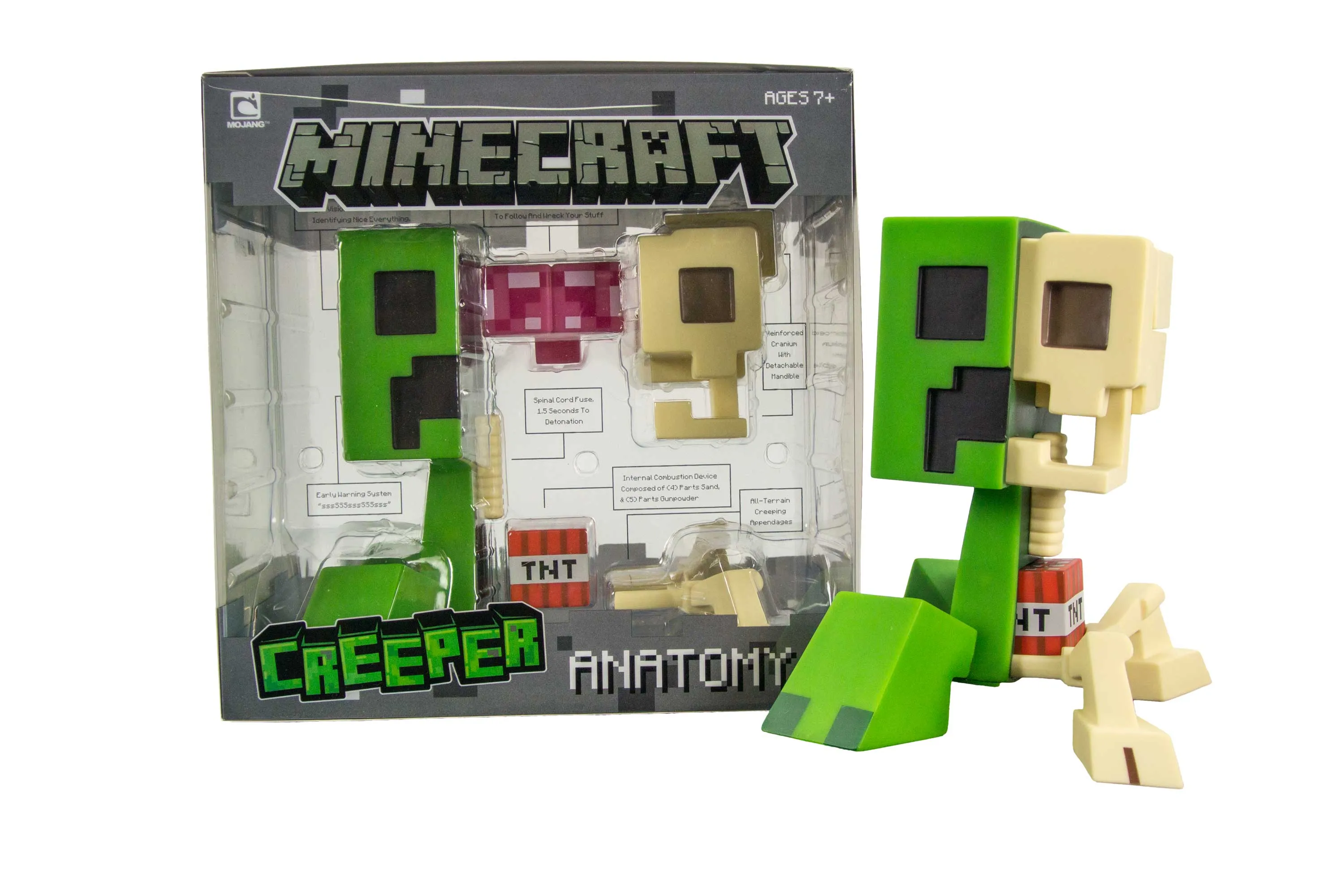
A recognizable Creeper, reimagined as an anatomy collectible.
The Minecraft Creeper Anatomy Toy was developed through Mad Toy Design for Jinx, an official Mojang licensee, as a dissected roto-cast vinyl collectible. The challenge was to give one of Minecraft's most recognizable characters an unexpected physical interpretation without losing its distinctive block-based identity.
Grounded in Minecraft. Built around discovery.
Discover what’s inside the unexpected.
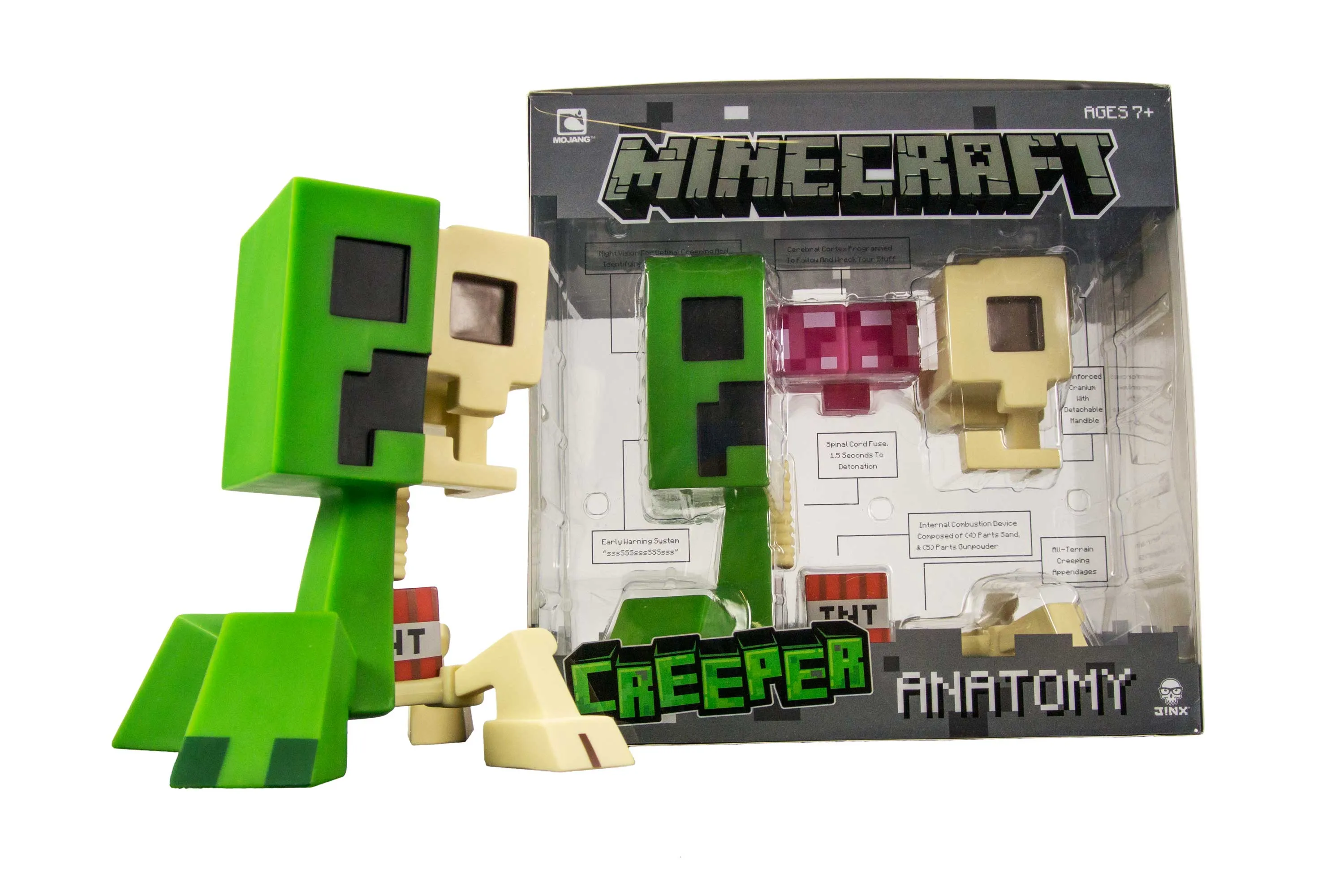
A dissected roto-cast vinyl collectible that reinterprets the Creeper through its internal parts. It keeps the character’s familiar Minecraft identity while giving fans a new object to examine, display, and collect.
See What Makes a Creeper Tick.
I know what a Creeper is—but I’ve never seen one like this.
Authentic
Preserve the block-based silhouette and instantly recognizable cues that make the Creeper feel true to Minecraft.
Unexpected
Use the dissected anatomy format to turn a familiar character into an object of curiosity and closer examination.
Collectible
Give the finished vinyl figure and package enough distinction to feel display-worthy as well as playable.
Story-driven
Let the product, labeled parts, and packaging reveal explain what is inside and why the concept is different.
Curious. Clever. Playful. Engaging. Inventive.
Recognize the character. Question the anatomy. Discover the parts. Keep the object.
The positioning framework defined how the product could feel new without losing its connection to Minecraft.
The framework set the direction for the product, package, and physical development that followed.
A collectible designed to reward a closer look.
Minecraft already supplied recognition. The opportunity was to use that recognition for a product that felt different from a conventional character figure.
The anatomy approach created that difference. It turned the Creeper into something to examine, not simply display, while keeping the character’s visual identity intact. The product could remain familiar and still offer a new physical interpretation with collectible and display value.
Familiarity + Discovery.
The product strategy translated the opportunity into a clear sequence:
“Recognize → Question → Discover → Collect”
Recognize
Preserve the cues that make the Creeper immediately identifiable.
Question
Use the dissected format to prompt a closer look.
Discover
Let the parts, labels, and package reveal explain the product.
Collect
Give the finished object enough distinction to display and keep.
This required a balance between Minecraft authenticity, product differentiation, curiosity, collectibility, packaging communication, and commercial feasibility. The concept had to be unusual without becoming disconnected from the property, and the package had to make the idea understandable at retail.
The Package Continues the Product Idea.
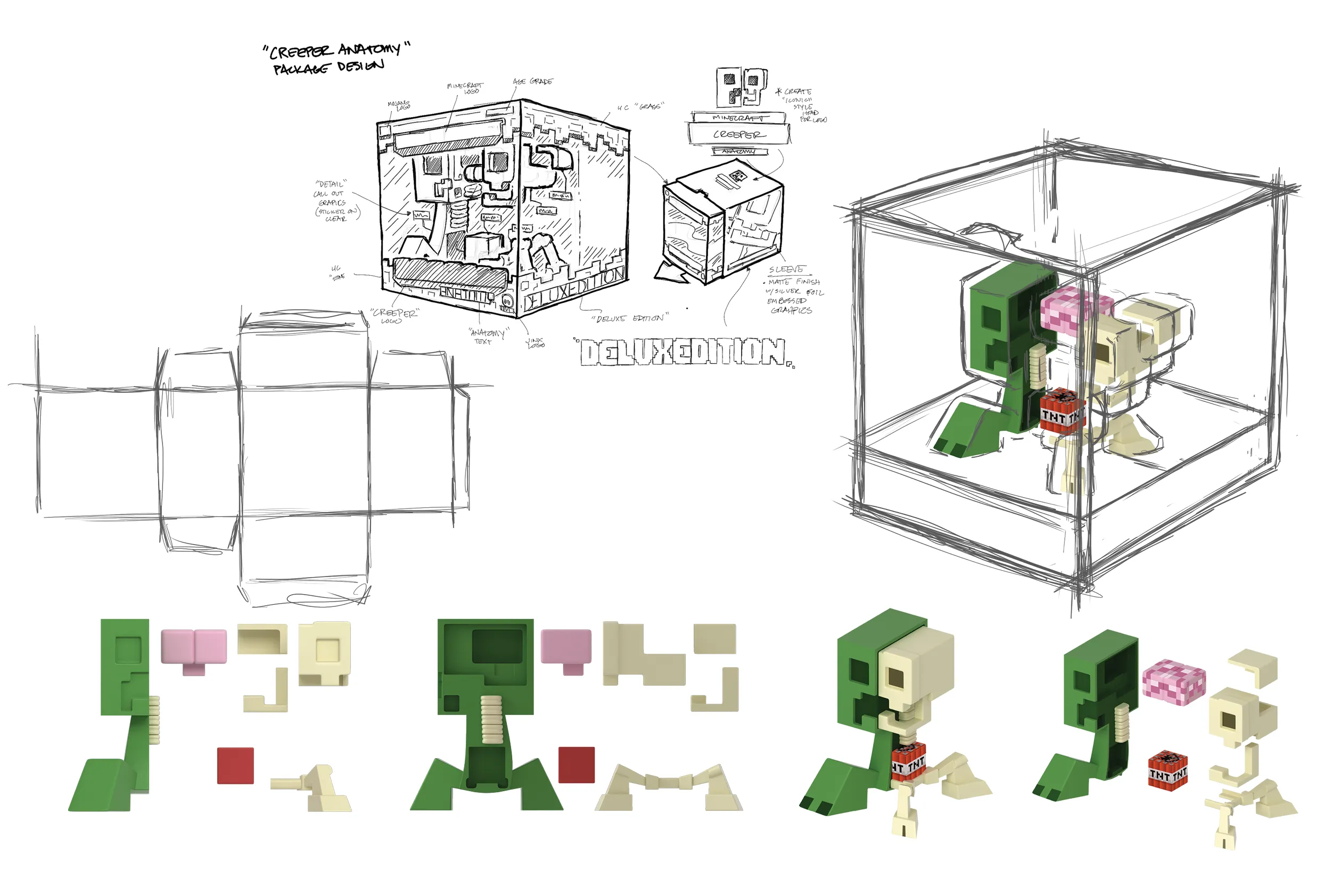
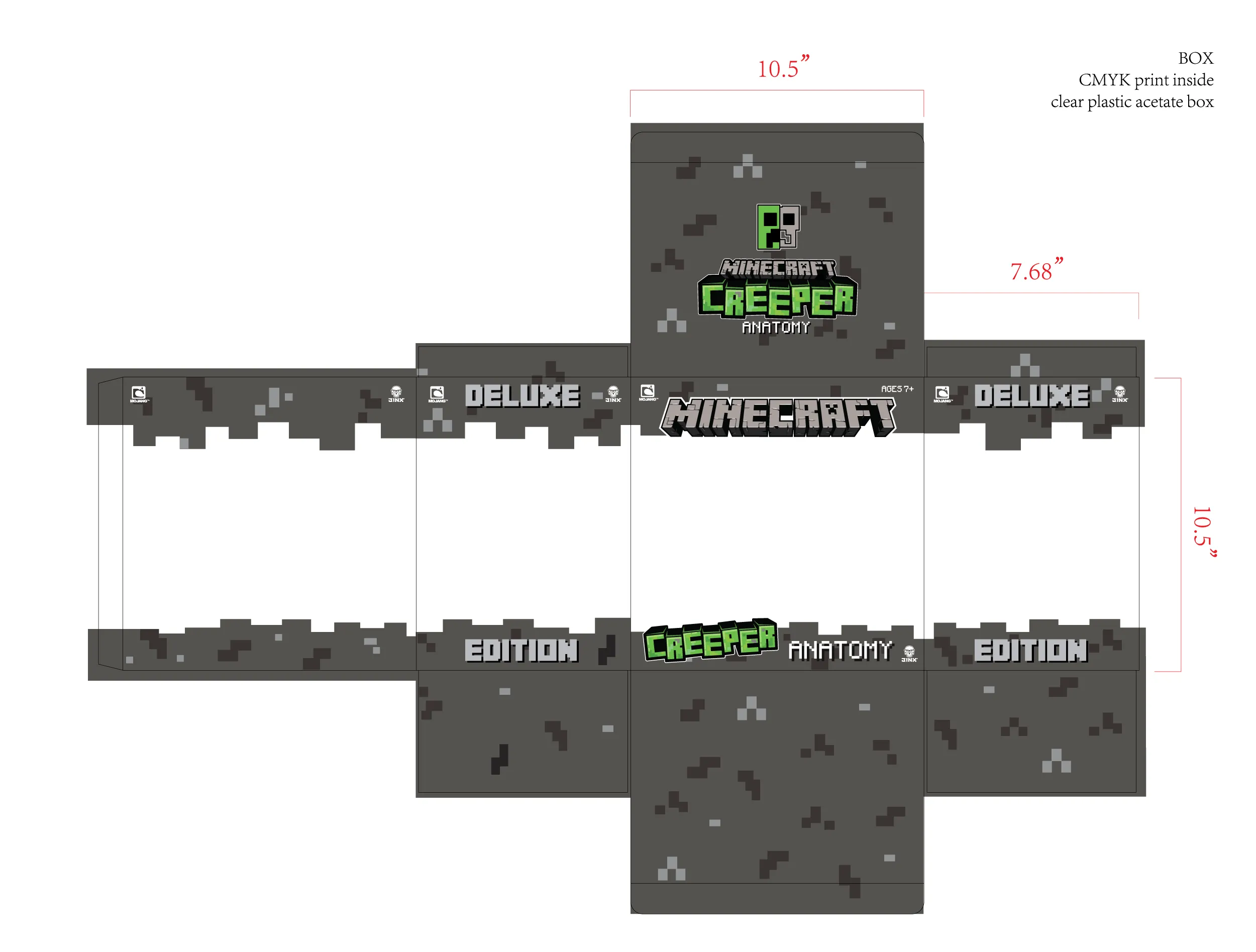
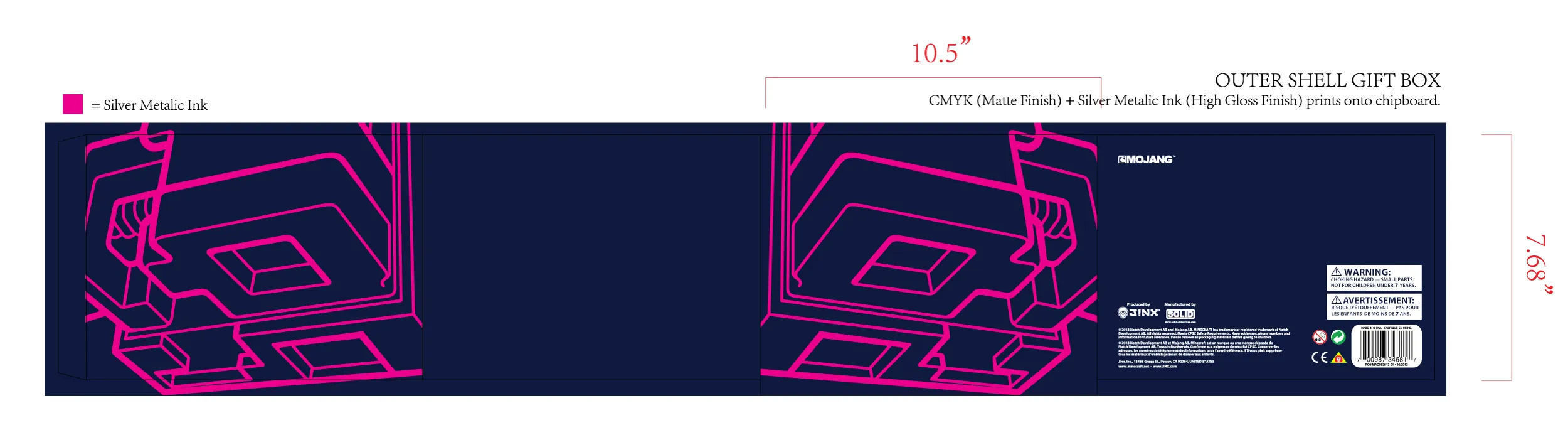
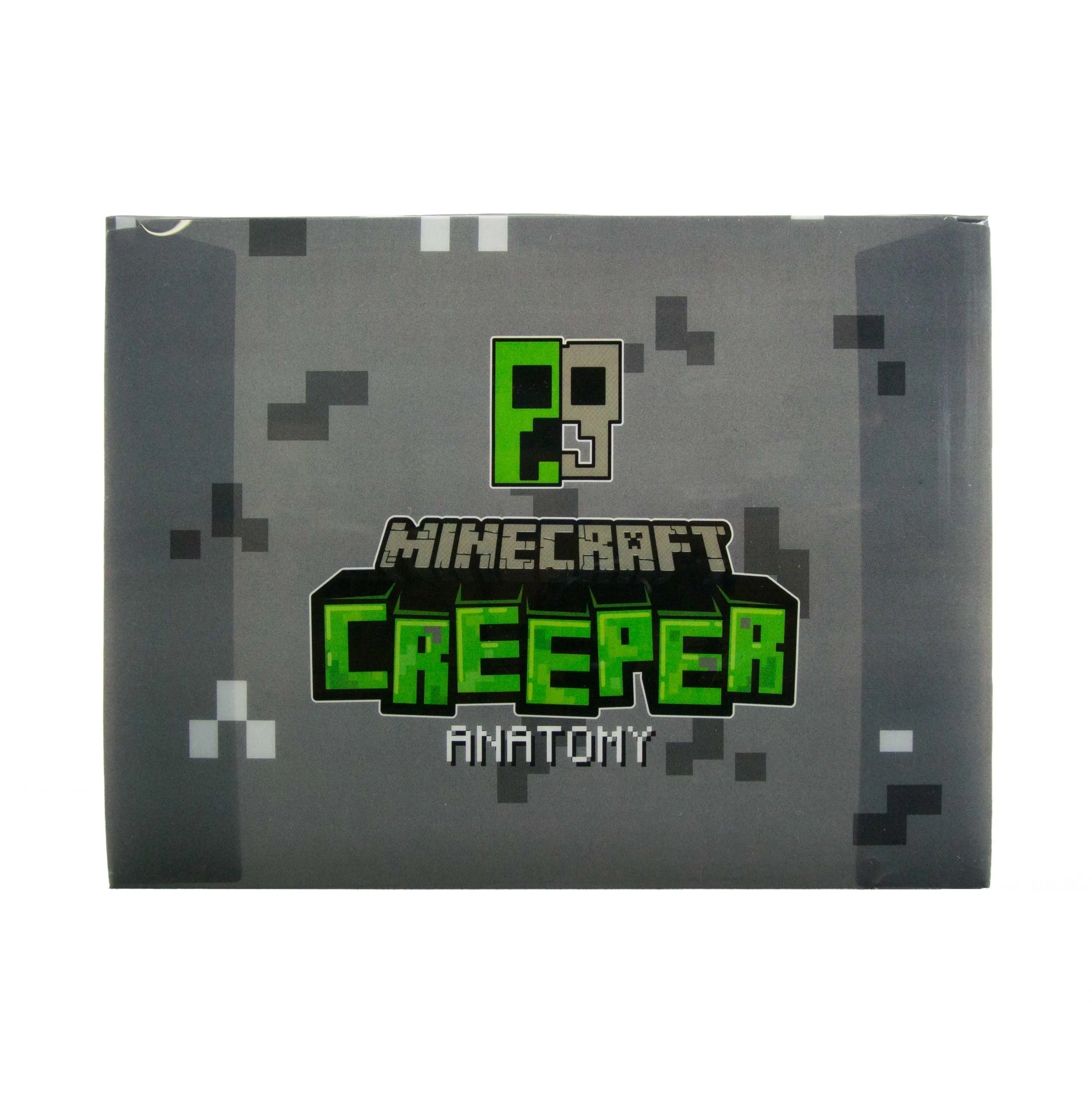
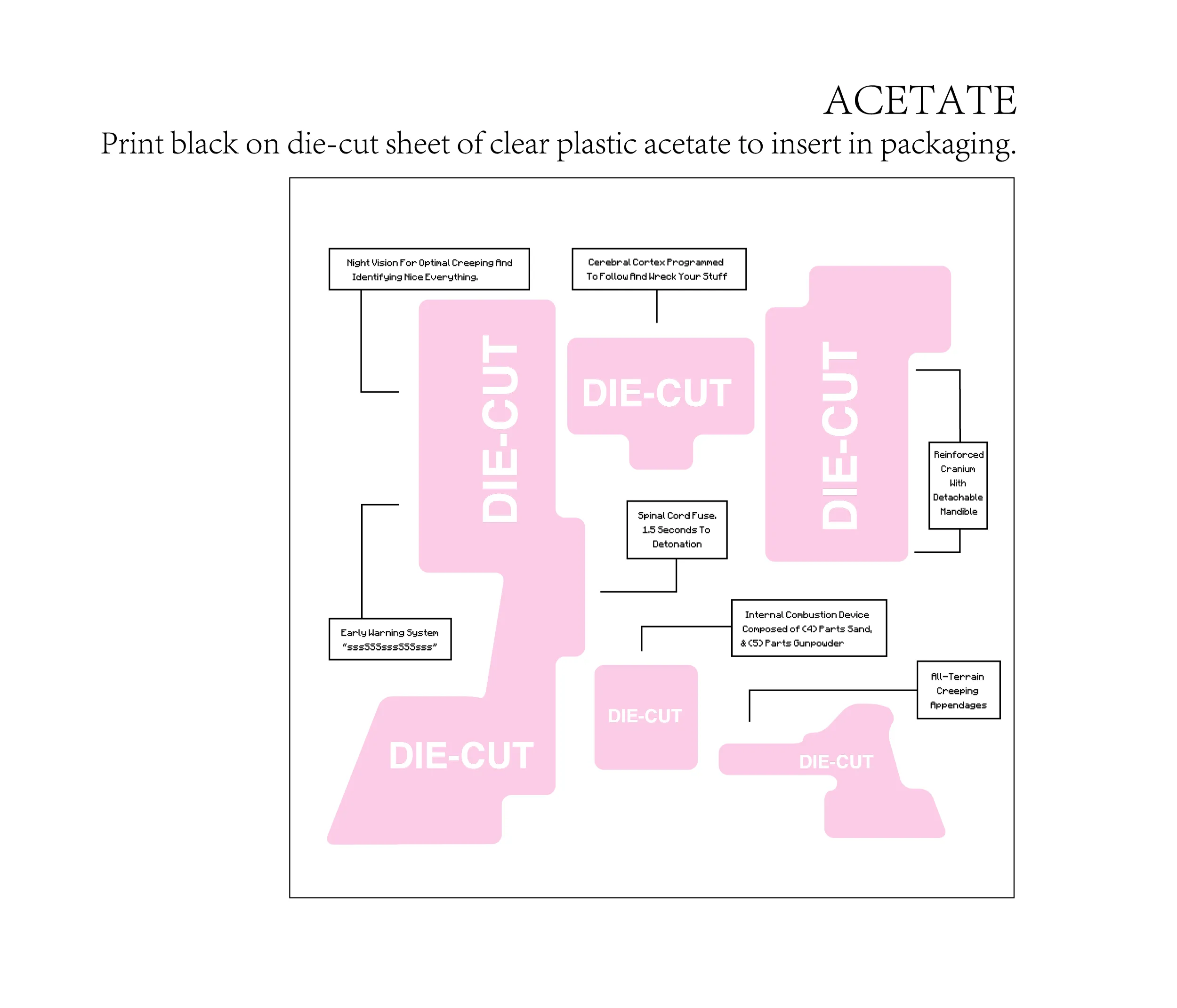
The packaging had to explain an unusual anatomy product, reveal its contents, communicate at retail, reinforce collectibility, and extend the Minecraft visual language.
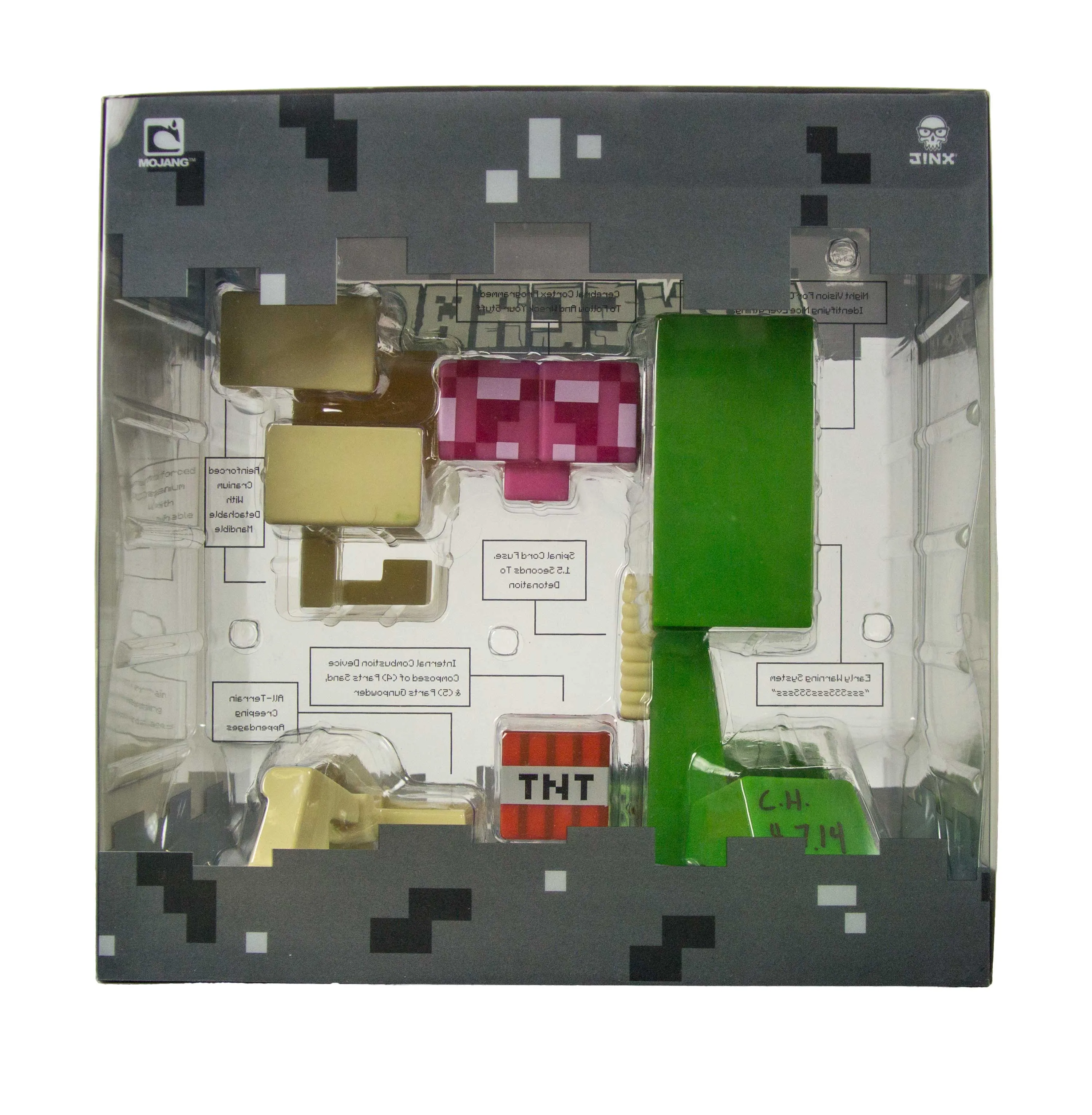
An exploded-diagram approach carried that work. Dielines, structural planning, artwork, labels, transparent presentation, and front/back views showed how the Creeper and its internal parts related to one another. The opened package then made the system visible as a physical arrangement rather than a conventional figure in a box.
The packaging extended the product’s central idea. It helped the viewer understand what they were seeing and why the product was different before the box was fully opened.
From Concept to Launch.
Concept → Sketches → Six-Angle Vector Artwork → 3D Development → Prototype → Manufacturing → Tooling → Revisions → Approvals → Packaging Production → Launch
Sketches, six-angle vector artwork, and 3D development translated the anatomy idea into a physical object. Prototypes tested how the concept could work as a roto-cast vinyl product and how the separate parts could be developed and presented.
Production introduced a different set of requirements. Material flexibility and wall thickness affected the physical construction, requiring collaboration with overseas manufacturers, tooling work, revisions, prototype review, and approvals. Packaging development continued alongside the product work so the finished object and its presentation stayed aligned.
My contribution connected product development, packaging design, and creative production coordination. I developed product and packaging assets, communicated directly with overseas manufacturers as tooling and production issues were reviewed, and coordinated prototypes, revisions, and approvals with the project’s creative and launch stakeholders. That coordination kept the physical product and its packaging aligned through production and launch.
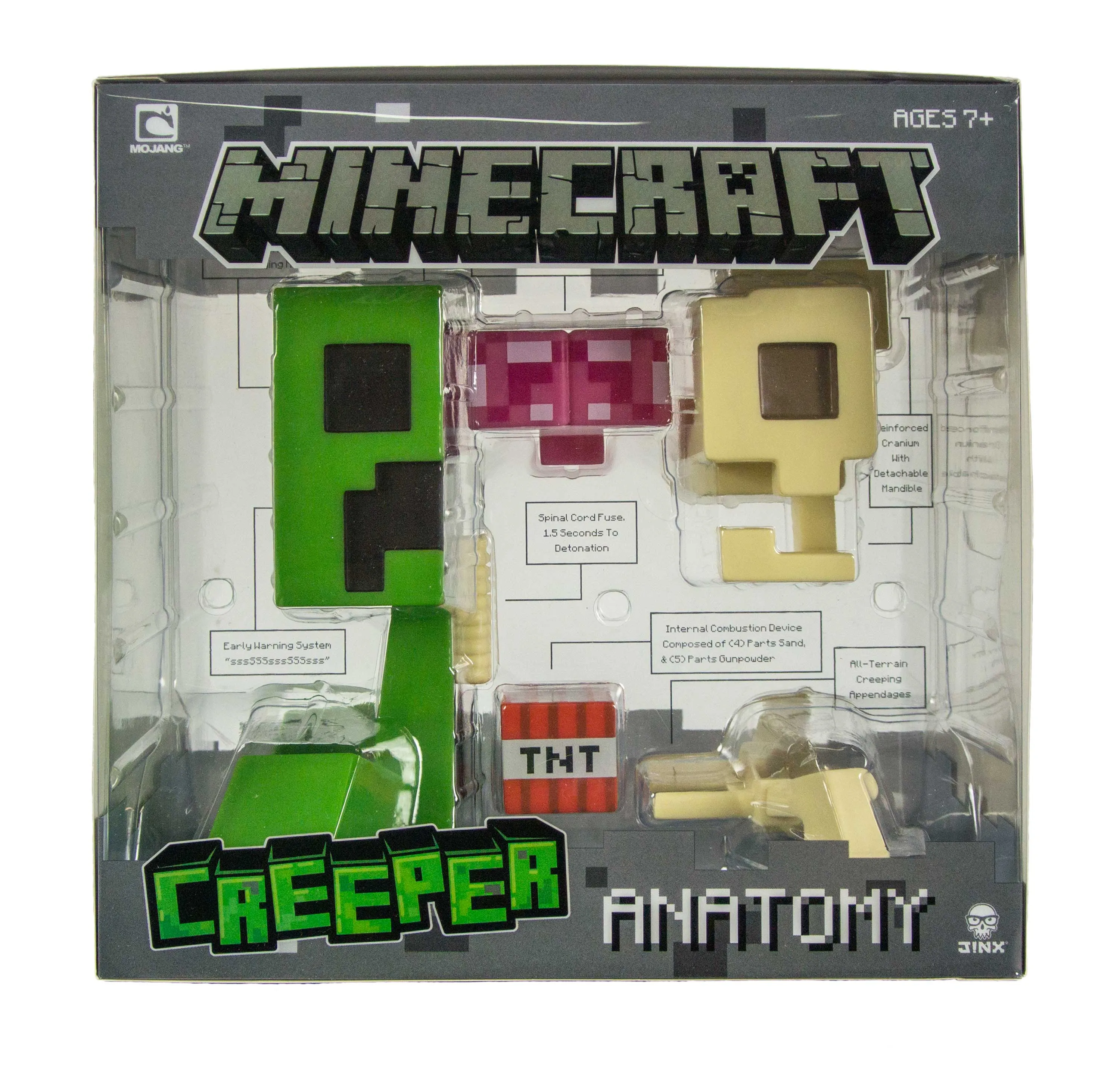
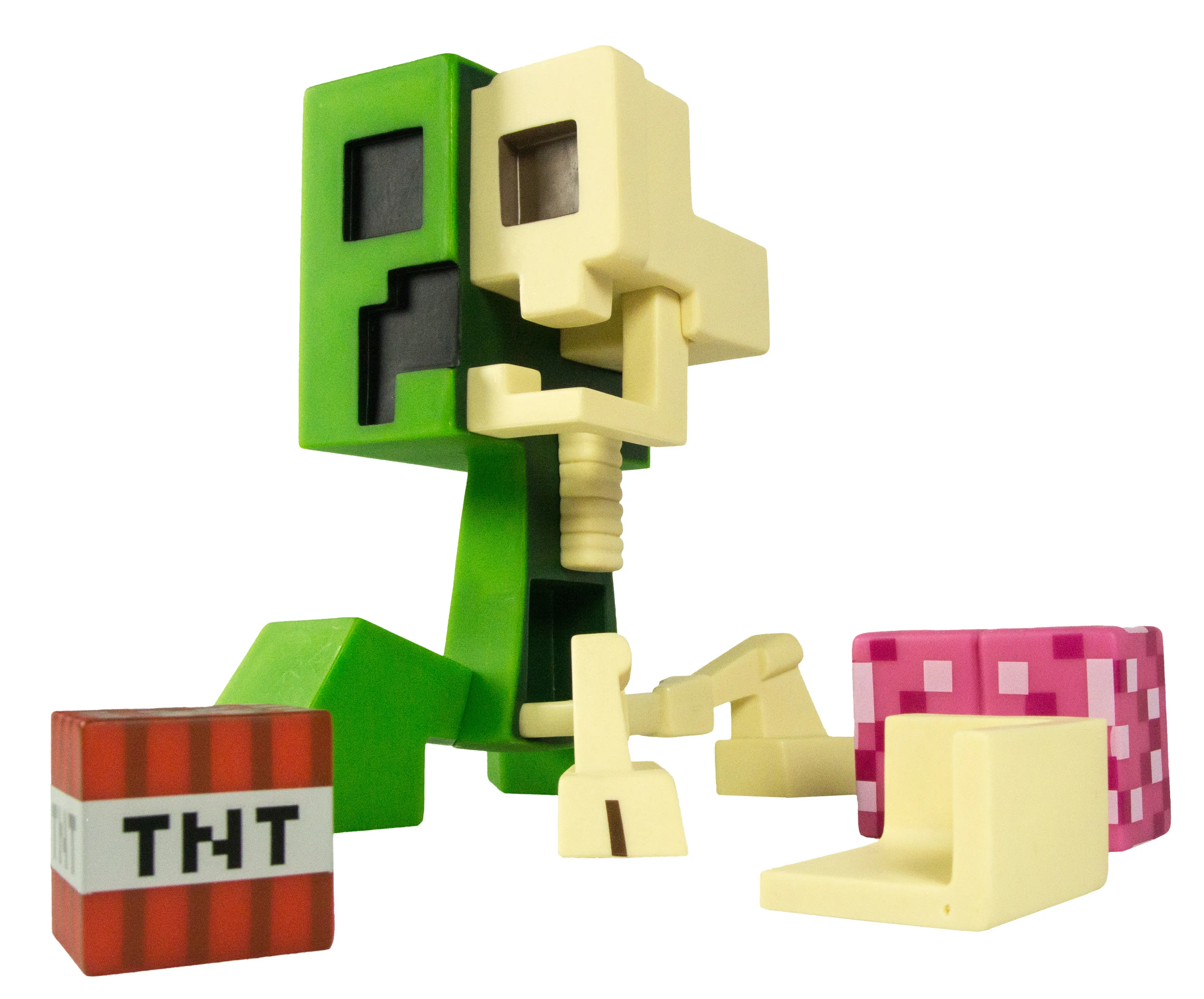
A Toys “R” Us exclusive, first released for NYCC.
The finished collectible connected a familiar Minecraft character with a new physical interpretation: a display-worthy anatomy object that kept the Creeper’s block-based identity while making its internal parts part of the experience.
Product and packaging communicated the same central idea. The product made the anatomy tangible, while the packaging used its structure and artwork to make the concept legible at retail before the box was opened.
The product launched as a Toys “R” Us exclusive and was initially released for New York Comic Con (NYCC). The finished product had a defect rate below 4%.